
7 Best Natural Gas Regulators for Global Buyers?

Choosing the right Natural Gas Regulators requires more than comparing prices or polished product photos. Global buyers must assess pressure range, flow capacity, gas compatibility, connection size, temperature limits, and installation conditions. A regulator used on a small commercial line may fail in a high-demand industrial system. Safety comes first.

This guide introduces seven strong regulator choices for international purchasing teams. Each option is considered through practical criteria, including body materials, diaphragm quality, shutoff performance, corrosion resistance, adjustment stability, and maintenance access. Manufacturer documentation, testing records, certification, and technical support also matter. Details matter. Regional requirements can differ, so buyers should confirm approvals with qualified engineers and local authorities before ordering.

There is no universal winner. A compact unit may suit a remote facility, while a larger model may provide steadier control for a processing plant. Field experience suggests that installation support can be as valuable as the regulator itself. Still, product claims deserve careful review. Some published specifications assume ideal gas quality, temperature, or inlet pressure. Real systems are rarely perfect. This comparison therefore highlights practical strengths, possible limitations, and questions buyers should ask suppliers. Readers can use the shortlist to narrow their options, then verify compatibility, documentation, replacement parts, and service availability for their specific market.
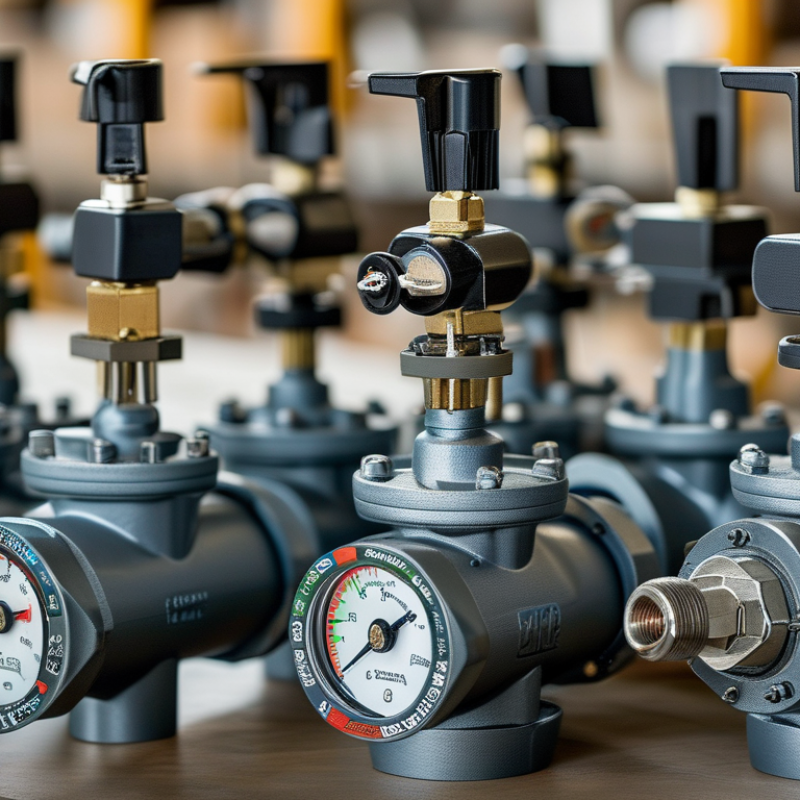
7 Best Natural Gas Regulators for Global Buyers?

Natural Gas Regulator Fundamentals: Pressure Ranges, Flow Rates, and ISO 23550

Choosing a natural gas regulator requires more than matching pipe size. Buyers should verify inlet pressure, outlet pressure, flow rate, gas composition, and operating temperature. A regulator rated for 1 bar inlet pressure may fail under a higher supply surge. Pressure ranges must cover both normal operation and realistic fluctuations.

Flow rate is usually expressed in standard cubic metres per hour or cubic feet per hour. It depends on pressure drop, specific gravity, and the required outlet pressure. A safety margin is useful, but excessive oversizing can cause unstable control at low demand. That detail is easy to miss. During field checks, technicians should measure static pressure, flowing pressure, and lock-up pressure with calibrated instruments. The regulator should respond smoothly when a burner starts, stops, or changes load.

ISO 23550 provides general requirements for safety and control devices used with gas-burning appliances, including relevant performance and construction principles. It does not replace local installation rules or appliance-specific standards. Buyers should request material specifications, pressure-test records, temperature ratings, and conformity documents from qualified suppliers. Installation also needs suitable venting, filtration, shutoff protection, and accessible maintenance points. One practical lesson is uncomfortable: catalog capacity figures may not match real pipeline conditions. Dust, moisture, and pressure pulsation can change performance. A documented commissioning test is therefore more reliable than a product table alone.

Global Buyer Demand Context: 404.4 Mt LNG Traded in 2023, Reports GIIGNL

Global LNG demand is reshaping how buyers evaluate natural gas regulators. GIIGNL reported 404.4 million tonnes of LNG traded in 2023, confirming a highly active international market. The figure also highlights a practical issue: gas quality, pressure, climate, and installation codes vary between destinations. One regulator rarely fits every project.

A strong shortlist may include pilot-operated, spring-loaded, monitor, slam-shut, two-stage, high-pressure, and heated regulators. Pilot-operated models suit large terminals with stable flow. Spring-loaded units offer simpler maintenance for smaller stations. Slam-shut protection can isolate gas after excessive pressure. Heated designs reduce freezing risks in cold climates. Carefully sized.

The IEA’s Gas Market Report noted that global LNG trade grew in 2023, while supply flexibility remained constrained. Buyers should therefore examine capacity at minimum and peak flow, inlet pressure range, outlet stability, noise, and response time. Materials should match gas composition and local temperature exposure. Certification under applicable pressure-equipment and gas-safety standards is essential, but documents alone are not enough. Installation records and test procedures matter.

In procurement reviews, total ownership cost often matters more than the quoted unit price. Spare diaphragms, calibration access, corrosion resistance, and local technical support can prevent costly downtime. I would not rank a regulator from catalogue data alone. Actual operating conditions can expose assumptions that looked reasonable on paper.

7 Best Natural Gas Regulators for Global Buyers?

Global Buyer Demand Context: 404.4 Mt of LNG Traded in 2023, According to GIIGNL

Rank Jurisdiction Principal Gas-Regulatory Body Primary Regulatory Function Market Structure Relevance for Global LNG Buyers Official Reference
1 United States Federal Energy Regulatory Commission (FERC) Regulates interstate natural-gas pipelines, pipeline rates, storage facilities and LNG terminal siting under federal jurisdiction. Competitive wholesale market with regulated pipeline transportation. Important for terminal approvals, pipeline connectivity, capacity access and U.S. LNG infrastructure oversight. ferc.gov/natural-gas
2 United Kingdom Office of Gas and Electricity Markets (Ofgem) Regulates gas and electricity networks, market conduct, consumer protection and energy-system rules. Liberalized gas market with regulated network charges. Provides a transparent framework for wholesale trading, balancing, network access and LNG entry into the British gas system. ofgem.gov.uk
3 European Union Agency for the Cooperation of Energy Regulators (ACER) Supports consistent application of EU energy-market rules and monitors cross-border electricity and gas markets. Integrated regional market with national regulators and harmonized cross-border rules. Useful for understanding cross-border transmission, market transparency, congestion management and regional LNG access. acer.europa.eu/gas
4 Australia Australian Energy Regulator (AER) Regulates natural-gas networks, access arrangements, network revenues and compliance with national energy rules. Competitive wholesale markets with regulated transmission and distribution networks. Relevant to buyers assessing domestic gas-network access, transportation charges and eastern-market supply conditions. aer.gov.au/industry/networks
5 Canada Canada Energy Regulator (CER) Oversees interprovincial and international pipelines, energy exports, imports and related infrastructure under federal jurisdiction. Market-based gas trading with regulated federally controlled transportation infrastructure. Helps buyers evaluate export authorizations, cross-border pipeline movements and federal energy-project requirements. cer-rec.gc.ca
6 Japan Ministry of Economy, Trade and Industry (METI) Administers gas-supply policy, market liberalization, safety rules and energy-resource security. Retail and wholesale gas markets opened to competition, supported by regulated network access. Key reference for import-oriented procurement, gas-market access, security-of-supply policy and LNG-related compliance. meti.go.jp
7 Singapore Energy Market Authority (EMA) Regulates the gas market, imports, licensing, piped-gas and LNG infrastructure, and energy-system security. Regulated gas-import framework with licensed market participants and centralized infrastructure oversight. A significant Asian trading and regasification hub; regulatory rules are relevant to import licensing and terminal access. ema.gov.sg/our-energy-story/gas
Global demand benchmark: GIIGNL reported that global LNG trade reached 404.4 million tonnes in 2023. The regulators above were selected for their relevance to major LNG-importing or LNG-exporting markets, cross-border gas transportation, infrastructure access and market transparency.

Source: International Group of Liquefied Natural Gas Importers (GIIGNL), Annual Report 2024; regulatory information from the official websites linked in the table. Regulatory responsibilities may vary between federal, national, state and provincial authorities.

Seven Regulator Categories Compared by Capacity, Materials, and Safety Design

7 Best Natural Gas Regulators for Global Buyers?

For global buyers, the best regulator depends on capacity, inlet pressure, gas quality, and installation conditions. Seven useful categories include domestic low-pressure, commercial low-pressure, medium-pressure, high-pressure, pilot-operated, slam-shut, and specialty regulators. Domestic models suit small appliances, while commercial and medium-pressure units support restaurants, workshops, and compact networks. High-pressure regulators require stronger bodies, accurate control, and disciplined commissioning. Pilot-operated designs handle larger flows. Slam-shut regulators add fast overpressure or underpressure protection.

Materials affect service life and maintenance. Aluminum bodies are lightweight and economical for controlled environments. Ductile iron offers stronger impact resistance. Steel supports demanding pressure duties, while stainless steel performs better against corrosion and wet gas exposure. Capacity should be checked at minimum inlet pressure, not only the advertised maximum. That detail is often missed. Safety design may include relief vents, internal filters, locking adjustment covers, and dual-stage pressure reduction.

Tips: Request flow data for startup and peak demand. Confirm gas composition and ambient temperature. Check inlet and outlet connections against local piping standards. Ask for test certificates, pressure ratings, and maintenance instructions. Installation should be completed by qualified gas professionals under applicable national rules. A regulator can appear correctly sized yet respond poorly during sudden load changes. Recheck the selection with real operating data before purchase.

Regional Compliance Checklist: EN 334, ASME B16.5, and CSA 6.18 Standards

7 Best Natural Gas Regulators for Global Buyers?

Regional Compliance Checklist: EN 334, ASME B16.5, and CSA 6.18 Standards

For global buyers comparing seven regulator options, compliance begins with the destination market. The IEA Gas 2024 report forecasts global gas demand to grow by about 2.5% annually through 2029. Demand is rising. This growth increases pressure on suppliers to verify safety, testing, and documentation before shipment.

EN 334 applies to gas pressure regulators used across European gas infrastructure. It evaluates functional performance, accuracy, lock-up pressure, and response under defined conditions. Check the regulator’s inlet range, outlet setpoint, temperature limits, and test records. ASME B16.5 is different. It specifies flange dimensions, pressure-temperature ratings, materials, and marking requirements. It does not prove regulator control accuracy. That mistake remains common.

CSA 6.18 should be reviewed for service regulator applications in Canada and other markets accepting CSA-based certification. Confirm the exact edition and certification scope with the local authority. A practical purchasing file should include drawings, material certificates, factory test results, relief protection details, and installation instructions. The flange class must match the pipeline, not merely the catalog page. Field experience shows that small errors often involve thread size, vent orientation, or incorrect pressure units. I have seen technically sound selections fail during commissioning because conversion details were overlooked. Buyers should also request traceable serial numbers and verify that every certificate describes the shipped configuration. The checklist is useful, but it cannot replace site-specific engineering judgment.

7 Best Natural Gas Regulators for Global Buyers

Regional Compliance Checklist: EN 334, ASME B16.5, and CSA 6.18

This seven-point checklist maps the primary compliance relevance of each standard. EN 334 focuses on gas pressure regulators, ASME B16.5 covers flange dimensions and pressure-temperature ratings, and CSA 6.18 is used for gas pressure regulator certification in Canada. A value of 1 means the standard is directly relevant to that review item; a value of 0 means it is not the primary reference. Always confirm the applicable edition, gas family, pressure range, connection type, and local authority requirements before purchase.

Best-Regulator Ranking Criteria: Cost, Reliability, Emissions, and Service Life

7 Best Natural Gas Regulators for Global Buyers?

Ranking natural gas regulators for global buyers requires more than comparing purchase prices. A low-cost unit may need frequent diaphragm replacement, costly shutdowns, or specialized technicians. I evaluate total ownership cost, including installation, calibration, spare parts, freight, and maintenance labor. Local gas composition and inlet pressure also matter. A regulator that performs well in a dry network may behave differently where contaminants or pressure swings are common.

Reliability depends on stable outlet pressure, responsive shutoff, and resistance to temperature changes. I look for documented pressure testing, material traceability, clear adjustment ranges, and accessible service instructions.

Emissions deserve equal attention. Small leaks around stems, vents, or damaged seals can waste gas and create workplace concerns. Models with effective sealing and controlled venting usually perform better, but published leakage figures need independent verification.

Paper claims are not enough.

Service life reflects construction quality and maintenance access. A durable housing helps, yet internal elastomers may age faster in heat, oil, or chemically aggressive gas. Operators should check replacement intervals, inspection records, and technician availability before ranking a unit highly. My practical scoring gives weight to reliability and emissions, not only price. Still, this approach is imperfect. Field conditions vary, and a regulator with an excellent laboratory record may underperform after poor installation or irregular maintenance. Real service reports often reveal more than a polished specification sheet.