


China Top 10 Stainless Valve Stem Manufacturers?
China’s stainless valve stem industry combines large-scale machining with increasingly precise corrosion-control practices. The best manufacturers do more than polish metal. They control material chemistry, stem straightness, surface finish, heat treatment, and dimensional consistency. These details matter when a stem operates inside a chemical line, food-processing system, or high-pressure water valve.
Corrosion authority Mars G. Fontana wrote, “Corrosion is a natural process.” That short statement explains why material selection cannot be separated from operating conditions. A reliable Stainless Valve Stem may use 304, 316, 316L, or hardened stainless steel, depending on temperature, pressure, chloride exposure, and packing design. A bright surface alone proves very little. Buyers should request mill certificates, inspection records, sample measurements, and evidence of traceability.
This introduction to China’s top 10 Stainless Valve Stem manufacturers examines more than production capacity. It considers machining equipment, tolerance control, finishing methods, quality systems, export experience, customization ability, and technical support. Factory audits can reveal practical differences. Look closely at thread quality, sealing contact, burr removal, packaging, and corrosion testing.
A ranking is never permanent.
Supplier information changes. Some published claims also require verification. That is an important weakness in many industrial lists. Therefore, this guide should support due diligence rather than replace it. Engineers and purchasing teams should compare drawings, test reports, lead times, and application references before approving a supplier. The strongest manufacturer is not always the largest. It is the one that consistently delivers the correct stem for the actual service environment.
Definition and Role of Stainless Valve Stems
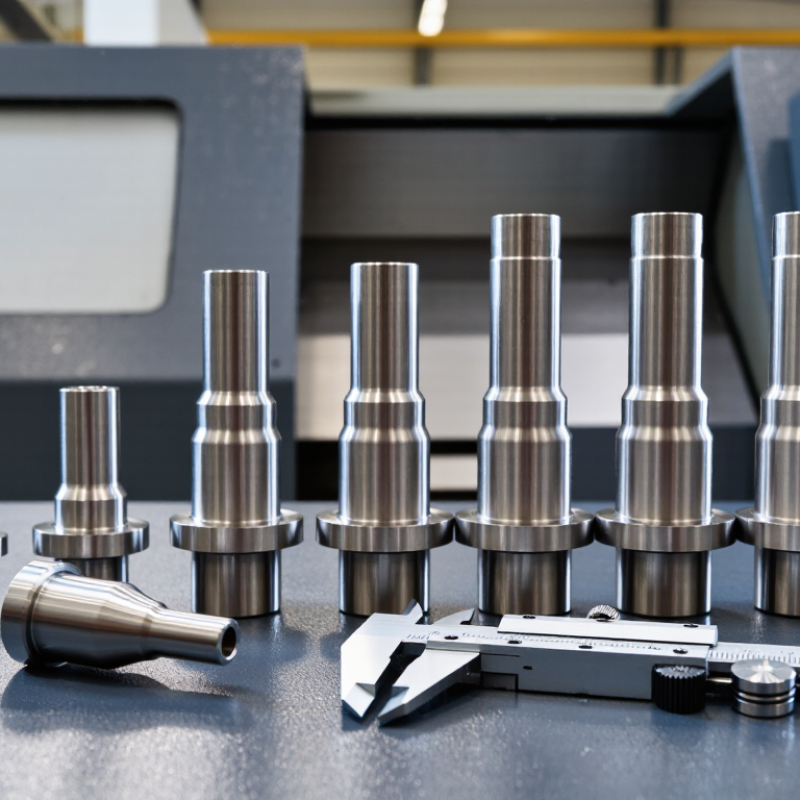
A stainless valve stem is the moving metal shaft inside a valve. It transfers force from the handle, actuator, or handwheel to the closing element. As the stem rotates or moves vertically, it controls the flow of liquid, gas, or steam. Its main job is simple: move accurately and keep the valve sealed.
Stainless steel is selected for its corrosion resistance, strength, and clean surface. These properties matter in chemical processing, food equipment, water systems, and outdoor pipelines. A well-made stem should resist rust, wear, galling, and repeated contact with packing materials. Its surface finish also affects sealing performance. Rough machining marks may damage packing and create leakage paths.
Material grade alone does not prove quality. Heat treatment, thread accuracy, dimensional control, and inspection records deserve attention. In practical maintenance, a stem can look bright yet fail after repeated cycling. That detail is easy to miss. Buyers evaluating Chinese manufacturers should request material certificates, tolerance data, load-test results, and corrosion test methods. However, paperwork may not reveal every production weakness. Sample testing and factory process reviews remain valuable. Stem design must also match pressure, temperature, media, and operating frequency. A stem for clean water may not suit abrasive slurry or high-temperature service. Even experienced teams sometimes focus too much on price. That choice can increase downtime later.
China Top 10 Stainless Valve Stem Manufacturers? - Definition and Role of Stainless Valve Stems
| No. | Stainless Steel Grade | Material Family | Key Valve-Stem Role | Corrosion Performance | Strength and Hardness Characteristics | Typical Valve Applications | Common Reference Standards |
|---|---|---|---|---|---|---|---|
| 1 | 304 / 304L | Austenitic stainless steel | Transfers actuator torque or handwheel force while resisting general atmospheric and process corrosion. | Good general corrosion resistance; limited resistance to chloride pitting. | Good ductility and machinability; not heat-treatable for hardening. | Water, air, food-processing, chemical-service, and general industrial valves. | ASTM A276, ASTM A479, UNS S30400/S30403 |
| 2 | 316 / 316L | Molybdenum-bearing austenitic stainless steel | Provides corrosion-resistant stem movement in chloride-bearing, marine, and chemical environments. | Better pitting and crevice-corrosion resistance than 304 because of molybdenum content. | Excellent toughness and ductility; 316L supports improved weldability. | Marine, pharmaceutical, chemical, food, water-treatment, and sanitary valves. | ASTM A276, ASTM A479, UNS S31600/S31603 |
| 3 | 17-4 PH | Precipitation-hardening stainless steel | Resists torsional load, bending, and wear in stems requiring high mechanical strength. | Good corrosion resistance in many industrial environments; lower than 316 in severe chloride service. | High strength after aging treatment; hardness and strength depend on H900–H1150 condition. | High-pressure process, oil and gas, power-generation, and severe-duty valves. | ASTM A564, ASTM A693, UNS S17400 |
| 4 | 410 | Martensitic stainless steel | Supports load-bearing stem designs where moderate corrosion resistance and hardenability are required. | Moderate corrosion resistance; requires suitable conditions and maintenance. | Heat-treatable with useful strength, hardness, and wear resistance. | Steam, petroleum, general industrial, and moderately corrosive valve service. | ASTM A276, ASTM A479, UNS S41000 |
| 5 | 420 | High-carbon martensitic stainless steel | Provides a harder working surface for stems exposed to friction, galling, and repeated cycling. | Moderate corrosion resistance when properly heat-treated and finished. | Higher attainable hardness and wear resistance than many austenitic grades. | Compact industrial valves, instrument valves, and applications requiring wear resistance. | ASTM A276, ASTM A479, UNS S42000 |
| 6 | Duplex 2205 | Duplex ferritic-austenitic stainless steel | Combines high stem strength with improved resistance to chloride stress-corrosion cracking. | High resistance to pitting, crevice corrosion, and chloride stress-corrosion cracking. | Approximately twice the yield strength of common 300-series stainless steels in typical conditions. | Offshore, desalination, chemical processing, pulp and paper, and oil-and-gas valves. | ASTM A276, ASTM A479, UNS S32205/S31803 |
| 7 | Super Duplex 2507 | Super duplex stainless steel | Maintains stem integrity in highly saline, high-pressure, and aggressive chemical environments. | Very high resistance to chloride pitting, crevice corrosion, and stress-corrosion cracking. | Very high strength; requires controlled welding, forming, and heat-treatment practices. | Seawater systems, offshore production, desalination, and aggressive chemical valves. | ASTM A276, ASTM A479, UNS S32750 |
| 8 | 321 | Titanium-stabilized austenitic stainless steel | Provides stable corrosion performance for stems exposed to elevated temperature and thermal cycling. | Good general corrosion resistance with improved resistance to intergranular corrosion after heating. | Good high-temperature stability; not normally selected for maximum hardness. | Hot gas, thermal-processing, exhaust, and high-temperature valve systems. | ASTM A276, ASTM A479, UNS S32100 |
| 9 | 347 | Niobium-stabilized austenitic stainless steel | Supports reliable stem operation where prolonged exposure to elevated temperature may occur. | Good resistance to intergranular corrosion after elevated-temperature exposure. | Good toughness and thermal stability; strength is generally lower than precipitation-hardening grades. | Power, petrochemical, thermal-processing, and high-temperature piping valves. | ASTM A276, ASTM A479, UNS S34700 |
| 10 | Austenitic Nitronic 50 | Nitrogen-strengthened austenitic stainless steel | Offers high-strength stem performance with good galling resistance and corrosion resistance. | Very good resistance to corrosion and galling in many aqueous and marine services. | Higher strength than standard 304 or 316 while retaining austenitic toughness. | Marine, chemical, water-treatment, cryogenic, and high-cycle valve applications. | ASTM A276, ASTM A479, UNS S20910 |