What Is the Best Portable Ring Light?
A good Portable Ring Light should solve a real lighting problem, not just look impressive in a product photo. For video calls, makeup tutorials, and short-form content, it can soften facial shadows and brighten the eyes. But brightness alone is not enough. Color accuracy, adjustable color temperature, battery life, and a stable mount matter when the light moves from a desk to a hotel room. Small details count. A loose phone clamp can ruin a carefully framed shot.
The demand for simple creator tools has a broader context. Adobe’s 2022 Future of Creativity study estimated that the global creator community had grown by 165 million people since 2020, reaching about 303 million. That figure describes creators, not ring-light buyers, so it should not be treated as proof of product sales. Still, it helps explain why portable lighting has become a practical consideration for more people. The best choice depends on the job: a compact clip-on model may suit quick calls, while a larger rechargeable light may work better for filming. There is no universal winner. Some advertised brightness claims also say little without details about distance and measurement conditions. A little skepticism helps. In this guide, we’ll compare the features that make a Portable Ring Light genuinely useful, including trade-offs that product listings often leave out. A perfect setup? Probably not. A reliable one is achievable.
What a Portable Ring Light Is and How It Works
What Is the Best Portable Ring Light?
What a Portable Ring Light Is and How It Works
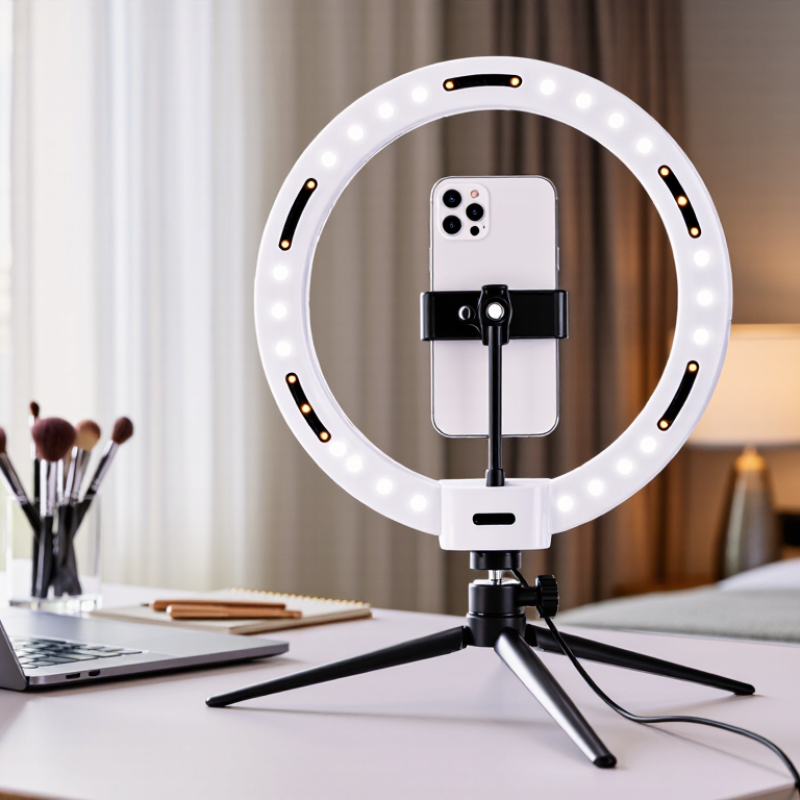
A portable ring light is a compact circle of LEDs, usually mounted around a phone or camera. Its shape places light close to the lens and spreads illumination around a subject’s face. That can soften sharp shadows under the nose and chin. The light also creates a round reflection in the eyes. A little theatrical, sometimes.
Inside, an LED circuit converts battery power into light. Many models offer brightness and color-temperature controls, letting users shift from warm indoor light to a cooler daylight look. A diffuser may smooth the LEDs, though a small ring cannot create the softness of a large window or softbox. Move it close, and the face brightens quickly; move it farther away, and the light becomes less intense.
The U.S. Department of Energy’s LED lighting guidance reports that LEDs use at least 75% less energy and last up to 25 times longer than incandescent lighting. Those figures describe LEDs broadly, not a specific ring light’s battery life. In practice, runtime depends on battery capacity, brightness, and charging efficiency. I would check those details before filming away from an outlet. Even then, the light may look flat if placed directly beside the lens, so a slight offset can add more natural facial shape.
Key Features That Shape Light Quality and Portability
A portable ring light is only useful when its light remains flattering at a practical distance. Look for adjustable brightness and color temperature, not just a high maximum output. A cooler setting can make white backgrounds look crisp, while a warmer one often suits indoor skin tones. Check faces on camera, too; the room’s walls can shift the color more than expected.
Diffusion matters. A bare, bright ring may leave sharp reflections in glasses and make skin look flat. A frosted cover or soft diffuser can smooth the light, though it may reduce brightness. I’ve found this easy to misjudge from product photos. Test the light at the distance you’ll actually use, such as beside a laptop or across a small desk. Small details show.
Portability depends on more than weight. A folding stand, secure phone holder, and compact controls make setup easier in cramped spaces. Battery life is useful for travel, but check whether brightness changes affect the stated runtime. A USB-powered option may be lighter, yet it ties you to an outlet or power bank. Feel the clamp before relying on it; a loose mount can slowly tilt during a call. The best balance is personal, and sometimes a slightly dimmer light looks better.
What Is the Best Portable Ring Light?
Light output drops as you move farther from a light source. This chart shows relative illuminance estimated with the inverse-square law, normalized to 100 at 0.5 m. It’s an approximation: a ring light is an extended source, so its actual falloff depends on its size and design.
For portable use, consider a light that provides enough output at your usual working distance, along with a compact, lightweight design and adjustable brightness.
How to Compare Brightness, Power, Mounting, and Controls
A portable ring light is only useful when its brightness suits the room and the camera. Compare brightness levels, not just the maximum setting. A dim bedroom may need gentle fill, while a windowless workspace can call for stronger output. Look for smooth adjustment, since a few harsh steps can make skin look washed out. Check the light from your usual camera distance. It may seem bright on a desk and look weak across a room.
Power affects where you can work. A built-in battery keeps cables off a small table, but runtime often drops at high brightness. Check the stated runtime and whether the light can operate while charging. Treat those figures as estimates; temperature and battery age can change them. A USB-powered model may suit a fixed desk better. Less convenient, perhaps.
Mounting deserves a close look. A stable clamp should grip your phone or laptop without covering buttons, and the joint should hold its angle after adjustment. If the light wobbles when you tap the screen, it will likely show in the shot. Controls matter, too. Buttons on the back can be awkward when the light sits above eye level. A wired remote or clearly marked dial may be easier to reach. Small details count. I once assumed a simple control panel would be intuitive, but tiny icons slowed me down during a call. Check the actual control layout before choosing.
Choosing a Portable Ring Light for Your Setup
Choosing a portable ring light starts with the space you actually use. A compact desk setup may need a small light with a weighted base, while a phone creator working in different rooms may prefer a folding tripod. Check the light’s height and clamp before buying; a phone that blocks the center can cast awkward shadows. Small details matter.
Look for adjustable brightness and color temperature, so the light can match a warm lamp or cool window light. A high color-rendering rating can help skin and product colors look more natural, though room lighting still affects the result. For travel, check the folded size, cable length, and whether the light runs from a rechargeable battery or an external power source. Convenient on paper is not always convenient in a bag.
Think about what you film. Close-up makeup work often benefits from even, soft light, while video calls may need only a gentle fill. A ring light placed too close can create bright circles in glasses or flatten facial features. Move it slightly above eye level and test a few distances. I still find that a window can beat a small light on cloudy days, which is mildly inconvenient but useful to remember. Test the setup with your camera before relying on it.