Choosing a Slide Gate Valve manufacturer is not just a matter of comparing prices. Buyers need equipment suited to the material, operating conditions, and maintenance plan. A valve handling dry grain may face different demands from one installed beneath a cement silo or mineral hopper.
This guide introduces ten manufacturers serving global buyers. It offers a starting point, not a universal ranking. Product range, body and gate materials, available sizes, operating methods, and documented performance all deserve careful review. Buyers should also check relevant certifications, production capabilities, spare-parts access, and technical support in their region. Details matter.
A specification sheet alone rarely tells the whole story. Ask how the valve performs with your actual material, especially if it is abrasive, prone to bridging, or sensitive to leakage. Confirm connection dimensions and installation clearances before requesting a quotation. Fit comes first.
The manufacturers discussed here may differ in specialization, geographic reach, and service model. That difference is useful, but it makes direct comparison less simple. No list can replace engineering review or a conversation with the supplier. Even experienced buyers can overlook a small detail, such as actuator access above a crowded hopper.
Use the profiles to narrow your options and prepare better questions. Compare claims against project requirements, request supporting documentation, and verify that the proposed design matches your process. A careful shortlist can save time later.
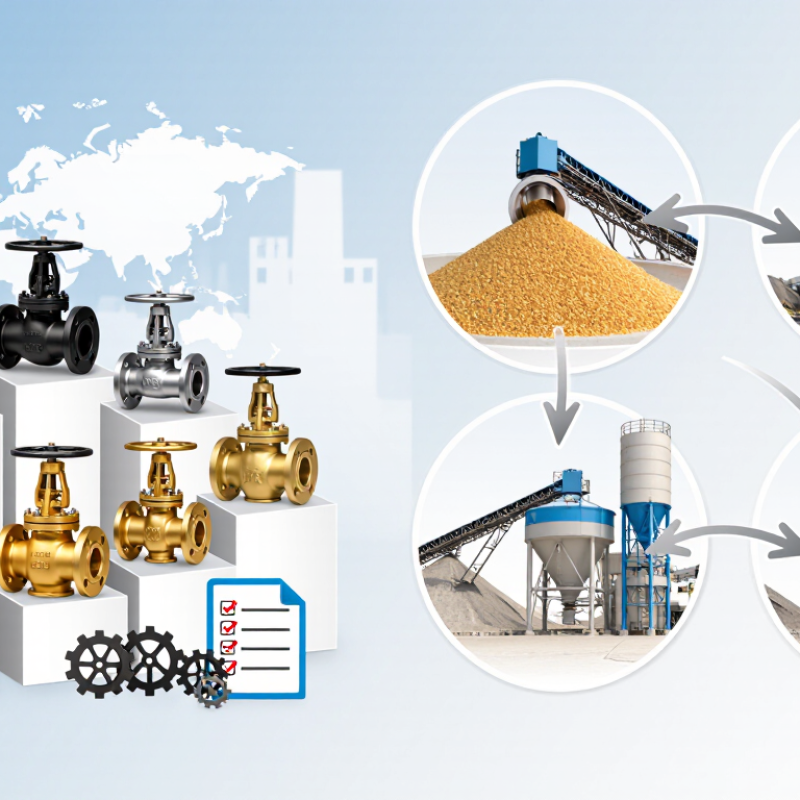
Slide gate valves control the discharge of dry, free-flowing bulk materials. A flat blade moves across an opening to stop or allow material flow. They are commonly installed beneath silos, hoppers, bins, and chutes. In these systems, gravity moves powders or granules through the valve. They are not usually chosen for precise flow control. That distinction matters.
Applications range from grain and plastic pellets to cement, minerals, and other bulk solids. Material behavior affects valve performance: fine powder may leak through small clearances, while abrasive particles can wear the blade and guides. Moisture can also cause buildup. A valve that works well with dry pellets may struggle with damp, compacting material. Site conditions deserve a closer look.
Tips: Match the opening size and body material to the product, temperature, and expected wear. Check access for cleaning and blade inspection. Ask how the valve handles dust and material pressure above it. Those details are easy to overlook. They can make maintenance harder than expected.
A slide gate valve controls the discharge of bulk materials by moving a flat gate across an opening. It is commonly used with powders, granules, grain, cement, and biomass.
For an ideal rectangular port, exposed opening area increases in direct proportion to gate travel. This is a geometric relationship, not a flow-rate curve; actual flow depends on the material, valve design, and operating conditions.
Top 10 Slide Gate Valve Manufacturers for Global Buyers?
Slide gate valve designs serve different applications by matching the gate, frame, and actuator to the material and operating conditions. In a grain silo, a broad, low-profile opening can release dry material with minimal obstruction. A pneumatic actuator may help when valves operate frequently or sit in hard-to-reach areas. For fine powders, sealing details matter because dust can escape through small gaps.
Coarse, abrasive solids place different demands on the gate. A reinforced plate and wear-resistant contact surfaces can reduce damage where particles scrape during movement. In cement or mineral handling, inspect the frame for buildup points and confirm the actuator can overcome material pressure. A larger actuator is not always the answer; poor alignment or compacted material may be the real issue. That is easy to overlook.
Tips: Check particle size, temperature, pressure, and expected cycling before choosing a design. Ask how the valve handles residue after shutdown. If flow control is required, verify that the selected model is rated for throttling; many slide gate valves are intended mainly for isolation. Test access and maintenance clearance, too. A valve that fits the drawing may still be awkward to service.
Comparing slide gate valve manufacturers starts with the duty, not the catalog. Record the conveyed material, particle size, temperature, pressure, and operating cycles. A valve handling dry ash faces different wear from one controlling wet slurry. Fit matters. Check body and gate materials, liner options, stem protection, and access for replacing seals. Ask for test records that match the proposed size and configuration, not just a general product certificate. A polished specification sheet can still leave gaps.
Reliability evidence should include leakage results, cycle testing, and documented inspection methods. The International Energy Agency’s 2023 industry tracking report estimates that industry uses about 37% of global final energy. That scale makes unplanned stoppages costly, though the figure does not predict any single plant’s losses. Compare quoted service life against actual duty conditions, and request references from similar processes. A neat catalog number is not proof.
Also compare lead times, spare-part availability, installation support, and clear maintenance instructions. The World Steel Association’s World Steel in Figures 2024 reports global crude steel production of about 1.89 billion tonnes in 2023, illustrating the demanding scale of bulk-material operations. For each supplier, ask how its design handles abrasive fines, misalignment, and repeated cycling. These details are easy to overlook. Sometimes the uncomfortable question is whether the proposed valve has been tested under conditions close to yours.
Use these criteria to compare suppliers against the same process conditions and documentation requirements. This is an evaluation framework, not a ranked list or a claim about any specific manufacturer. Standards and regulations apply only when relevant to the valve design, intended service, and destination market.
| Comparison criterion | Evidence to request | How to compare |
|---|---|---|
| 1. Application and process fit | Written confirmation of suitability for the conveyed material, particle size, flow characteristics, temperature, pressure, and operating cycle. | Compare proposals using identical process data. Check whether the supplier identifies limitations such as abrasive, corrosive, sticky, or high-temperature service. |
| 2. Pressure and temperature limits | Product datasheet stating allowable operating pressure and temperature for the offered size, body material, seat, and configuration. | Verify the published limits cover the actual operating and design conditions; do not compare pressure figures without checking configuration and temperature effects. |
| 3. Size and end connections | Dimensioned drawings, nominal size range, face-to-face or installation dimensions, and connection details. | Confirm compatibility with the plant layout and mating equipment. Where applicable, check stated flange dimensions against the specified edition of ASME B16.5 or EN 1092-1. |
| 4. Materials and wear options | Bill of materials for the body, gate, seat, stem, and seals, with material grades and optional wear-resistant or corrosion-resistant features. | Check material compatibility with the process and required service life. Verify exact grades and traceability requirements rather than relying on broad descriptions such as “stainless steel.” |
| 5. Seat and leakage performance | Written leakage specification, test medium, test pressure, duration, acceptance criteria, and whether the test covers the complete assembled valve. | Compare stated acceptance criteria directly. ISO 5208 or API 598 may be relevant when agreed and applicable to the valve design; do not assume either standard automatically defines every slide gate valve test. |
| 6. Actuation and controls | Manual or powered actuator data, required operating force or torque, duty cycle, control signals, fail position, and accessory list. | Check that the actuator is sized for the specified service and operating frequency. ISO 5211 mounting compatibility is relevant where the design uses that interface. |
| 7. Regulatory and standards scope | Applicable declarations, certificates, and technical documentation for the destination market and intended installation. | Confirm applicability before comparing claims. EU Pressure Equipment Directive 2014/68/EU and ATEX Directive 2014/34/EU apply only when the product and use fall within their respective scopes. |
| 8. Quality management | Current quality-management-system certificate, including the certified legal entity, manufacturing site, scope, and validity dates. | Verify the certificate with its issuer or accreditation body. ISO 9001 certification concerns a quality-management system; it is not, by itself, product approval or proof of valve performance. |
| 9. Inspection and documentation | Inspection and test plan, test reports, material certificates, operating instructions, maintenance guidance, and as-built drawings as required by the purchase specification. | Specify document deliverables before ordering. Where material inspection documents are required, agree the applicable EN 10204 document type and scope in the contract. |
| 10. Service, spares, and delivery | Quoted manufacturing and delivery lead time, warranty terms, spare-parts list, service locations, and support response commitments. | Compare written commercial commitments for the same scope and delivery destination. Check the availability and interchangeability of wear parts over the expected service period. |
Buyer note: Request comparable technical submissions from each supplier and evaluate them against the project specification. Confirm the current editions and applicability of cited standards with the relevant standards body or project engineer.
Slide gate valve manufacturers serve different operating conditions, so a useful profile looks beyond product range. A foundry-led producer may control casting quality and material traceability. A refractory specialist focuses on gates exposed to hot, abrasive flow. A custom engineering shop adapts dimensions, drive systems, and sealing details. A bulk-handling supplier designs around dusty powders and frequent cycling. A compact-equipment maker suits tight layouts, though capacity may be limited.
Another profile is the retrofit specialist, which measures existing frames and connection points before proposing replacements. An industrial-project supplier coordinates valves with conveyors, hoppers, and control systems. An export-oriented manufacturer may offer broader documentation and crating options. A service-led producer emphasizes spare parts and field support. Response time matters. A digitally equipped factory may track inspections and test records, but software alone cannot prove sound workmanship.
The tenth profile is a general-purpose manufacturer serving several process sectors. Its standard models can shorten lead times, while unusual temperatures or materials may require careful review. Buyers should compare body construction, gate material, leakage expectations, actuator choice, and documented test methods. Ask for drawings and maintenance intervals. Then check whether stated limits match the actual process. Details can be missed, even in polished specifications. A site-specific review remains worthwhile.
When comparing slide gate valve suppliers, match each design to the actual service conditions. Share the media, operating temperature, pressure, particle size, and required opening dimensions. Ask for drawings that show gate thickness, sealing arrangement, actuator details, and connection dimensions. A supplier should explain material choices, not just list them. Details matter.
For an international purchase, request inspection records, material certificates, and a clear description of pressure or functional testing. Confirm how components are identified and traceable to their records. Check export packaging, spare-part availability, production lead time, and who handles technical questions after shipment. A low quote may exclude testing or special packing, so compare the same scope line by line. A neat brochure can still hide gaps; I would not treat polished wording as proof. Even a thorough checklist cannot replace reviewing the drawings with the people who will install and maintain the valve.