Choosing a Hydraulic Pressure Regulator in 2026 requires more than comparing catalog prices.
Global buyers face different pressures, fluids, temperatures, and service expectations. A compact direct-acting model may suit a mobile machine. A pilot-operated regulator may perform better in a factory manifold with fluctuating flow. Small details matter. Port size matters. So does pressure stability.
Hydraulic author Harry L. Stewart wrote, “The successful application of fluid power depends upon understanding both its capabilities and limitations.” That principle still guides responsible selection today. A regulator is not simply a valve with a pressure label. It controls energy that can affect cylinders, pumps, seals, and operator safety.
This guide examines leading Hydraulic Pressure Regulator options for international buyers in 2026. It considers pressure range, flow capacity, response time, adjustment accuracy, material quality, and compatibility with mineral oil or approved hydraulic fluids. It also considers documentation, replacement support, and manufacturer consistency across markets.
Look beyond the maximum rating. Check the working pressure, minimum flow, pressure drop, temperature range, and contamination tolerance. Ask whether the stated performance came from laboratory testing or real equipment. That distinction can matter in a dusty quarry or a cold outdoor installation.
No product wins every application. Some published specifications remain incomplete. Even a respected brand may need field validation. Buyers should compare test data, request technical drawings, and confirm regional service availability before ordering. The best choice is rarely the cheapest unit. It is the regulator that holds pressure steadily, protects connected components, and remains understandable when maintenance becomes urgent.
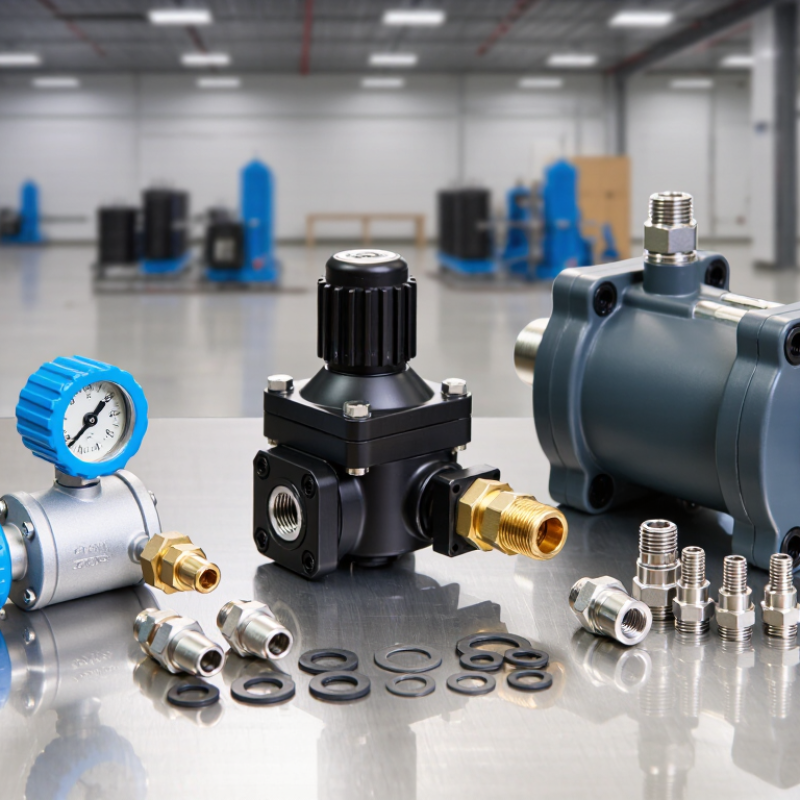
Hydraulic Pressure Regulators: Definition, Purpose, and Operating Principles
A hydraulic pressure regulator controls fluid pressure within a defined range. It helps protect valves, cylinders, hoses, and other circuit components from excessive force. In practical systems, the regulator receives high-pressure oil and delivers a steadier downstream pressure. This stability supports smoother movement and more predictable machine performance.
Most regulators use a spring-loaded spool, diaphragm, or poppet mechanism. When downstream pressure rises, the sensing element moves against the spring force. The valve then restricts flow, reducing pressure toward the selected setting. When pressure falls, the opening increases again. This response is continuous, not instant. Temperature, oil viscosity, contamination, and flow demand can affect accuracy. A regulator is not always a relief valve. The two devices may work together, but they perform different duties. A common mistake is choosing a regulator by port size alone. I have seen pressure drift after installation because the actual flow range was ignored.
Tips: Check pressure with a calibrated gauge near the regulated outlet. Set the regulator while the system reaches normal operating temperature. Keep oil clean and inspect seals during maintenance. If pressure hunts repeatedly, examine trapped air, unstable loads, and incorrect spring selection. Small errors matter. Document the final setting, flow conditions, and observed response for future servicing.
Hydraulic pressure regulators reduce and stabilize downstream pressure by balancing inlet pressure against a spring-loaded or pilot-controlled sensing mechanism. The chart shows representative pressure levels commonly encountered in major hydraulic applications. Actual regulator selection depends on working pressure, flow rate, fluid compatibility, temperature, connection size, and safety requirements.
2026 Top Hydraulic Pressure Regulators for Global Buyers
A reliable hydraulic pressure regulator should match the system’s inlet pressure, outlet range, and required flow rate. Check both continuous and peak pressure ratings. A valve rated for 250 bar may not safely handle repeated surges near that limit.
Flow capacity matters under real operating conditions. Compare rated flow at the intended pressure drop, not only the catalog maximum. Response time, pressure stability, and hysteresis also affect cylinders, presses, and mobile equipment. Small details matter.
Material selection requires practical judgment. Steel bodies suit demanding environments, while corrosion-resistant alloys may perform better near moisture or chemicals. Confirm seal compatibility with the actual hydraulic fluid and temperature range. Port size, connection standard, and installation direction can prevent costly field changes.
Ask for test conditions, calibration records, and traceable inspection data. A claimed accuracy figure has limited value without defined pressure, temperature, and flow conditions. Test the real fluid. Contamination tolerance is equally important, because particles can damage control surfaces and cause drifting pressure.
I once treated a wide adjustment range as a clear advantage. It was not. Fine control became difficult at low pressure. Buyers should compare adjustment sensitivity, locking methods, maintenance access, and replacement seal availability. Regional documentation, pressure units, and compliance records also deserve attention before shipment. Higher flow is not always better; it can increase pressure loss, heat, and energy consumption.
2026 Top Hydraulic Pressure Regulators for Global Buyers
Top Hydraulic Pressure Regulator Types for Different Applications
Hydraulic pressure regulators control downstream pressure when system loads change. Direct-acting regulators suit compact circuits, low flow rates, and simple machinery. Their spring mechanism responds quickly, but accuracy can decline near maximum capacity. A factory technician may choose this type for a small clamping unit with steady demand.
Pilot-operated regulators handle higher flow and tighter pressure control. A pilot valve senses downstream pressure and guides the main valve. This design works well in presses, injection equipment, and industrial power units. It needs clean hydraulic oil. Contamination can cause delayed response or unstable pressure.
Proportional electro-hydraulic regulators offer adjustable pressure through an electrical command. They fit test benches, mobile machinery, and automated production lines. Engineers can connect them to sensors and controllers for repeatable force management. However, wiring faults and poor calibration can create unexpected pressure changes. Manual relief regulators remain useful for basic protection and independent adjustment. They are often easier to inspect beside a pump station.
Selection should consider flow range, pressure rating, fluid temperature, response time, and port size. A regulator rated for pressure may still perform poorly at very low flow. That detail is easy to miss. Field checks should include gauge accuracy, leakage, vibration, and filter condition. Real systems are rarely perfect. Slight pressure fluctuations may come from the pump, not the regulator.
Global buyers need more than a pressure range and a polished product sheet. A 2025 U.S. Department of Energy Better Plants report identifies leakage, throttling, and poor maintenance as major hydraulic energy losses. Therefore, buyers should request flow curves, relief stability data, temperature limits, and verified leakage results. A regulator that performs well at 20°C may drift beside a hot press.
Compliance must be matched to the destination market. ISO 4413 provides core safety principles for hydraulic systems, while ISO 9001 supports controlled manufacturing processes and traceability. Ask for material certificates, batch records, calibration dates, and pressure-test evidence. For machinery entering Europe, confirm applicable conformity duties under Regulation (EU) 2023/1230, which begins applying in 2027. Local requirements still differ.
Supplier selection requires practical testing, not paperwork alone. The World Bank’s Commodity Markets Outlook highlights continuing volatility in metals and energy costs, so buyers should evaluate spare-part pricing, lead times, and packaging protection. Request samples for cold-start, contamination, and repeated-cycle trials. Keep one regulator under observation for several weeks. Small details matter. A supplier may offer impressive laboratory data but weak after-sales support. I would also question my own assumptions: the cheapest compliant unit may create higher downtime, while the most expensive option may add features the system never uses.
Hydraulic pressure regulation is becoming more precise, connected, and energy-aware in 2026. Grand View Research reports that the global hydraulic equipment market was valued at approximately USD 49.6 billion in 2023. It also forecasts a compound annual growth rate of about 4.8% through 2030. This expansion is increasing demand for compact regulators with stable pressure control under changing loads.
Smart monitoring is gaining practical importance. Sensors now track pressure spikes, temperature, and valve response during operation. According to MarketsandMarkets, industrial Internet of Things spending continues to grow across manufacturing, where predictive maintenance supports lower downtime. For hydraulic systems, this means regulators may send early warnings before seal damage or pump stress becomes visible. The useful detail is often small: a repeated two-bar fluctuation during a lifting cycle can reveal a failing control element.
Energy efficiency remains a difficult target. The U.S. Department of Energy identifies fluid power efficiency as a major industrial improvement opportunity, although actual savings depend heavily on system design. A regulator cannot compensate for undersized pipes, poor filtration, or excessive standby pressure. This is where many purchasing plans remain incomplete. Global buyers should compare response time, leakage performance, contamination tolerance, and local service capability, not only catalog pressure ranges. Digital features sound impressive. Field reliability still matters more.
| Technology / Regulator Type | Typical Pressure Class | Typical Controlled-Pressure Range | Typical Flow Capability | Pressure-Setting Accuracy | Response Characteristics | Key Advantages | Common Applications | 2026 Buyer Trend |
|---|---|---|---|---|---|---|---|---|
| Direct-Acting Pressure-Reducing Valve | Up to approximately 315 bar | 5–250 bar | Low to medium flow; commonly up to about 100 L/min | Typically ±3% to ±5% of set pressure | Fast response at low and moderate flow rates | Compact construction, low initial cost, simple adjustment and maintenance | Clamping circuits, auxiliary lines, machine tools and compact mobile equipment | Demand is moving toward compact cartridges, lower pressure losses and easier field adjustment |
| Pilot-Operated Pressure-Reducing Valve | Up to approximately 420 bar | 10–350 bar | Medium to high flow; commonly 100–500 L/min | Typically ±1% to ±3% of set pressure | Stable regulation over wider flow changes; pilot tuning is required | Good pressure stability, reduced sensitivity to flow variation and high-flow suitability | Industrial presses, injection-molding machinery, steel equipment and large hydraulic power units | Buyers increasingly prioritize low hysteresis, contamination tolerance and remote pressure adjustment |
| Pressure-Relief Valve | Up to approximately 700 bar | 20–630 bar | Medium to very high flow | Typically ±3% to ±5% of set pressure | Rapid pressure limiting; performance depends on damping and sizing | Protects pumps, actuators and circuits from overpressure | General hydraulic power units, construction machinery, presses and test systems | More projects specify lower noise, stable operation during pressure spikes and energy-efficient unloading |
| Proportional Electro-Hydraulic Pressure Regulator | Commonly up to 315–420 bar | 5–350 bar | Low to high flow, depending on valve size | Typically ±1% to ±3% of full scale with suitable electronics | Fast electronic command response; closed-loop systems provide the highest control quality | Remote adjustment, programmable pressure profiles and integration with machine controls | Automation, mobile hydraulics, robotics, material handling and variable-load machinery | Strong growth in digital control, CAN-based communication, condition monitoring and predictive maintenance |
| Servo-Controlled Pressure Regulator | Commonly up to 315–700 bar | 10–630 bar | Medium to high flow | Often better than ±1% of set pressure in a properly tuned system | Very fast and precise response; requires clean fluid and correct commissioning | High repeatability, precise pressure control and suitability for dynamic loads | Hydraulic test benches, forming equipment, aerospace support systems and precision presses | Demand is concentrated in high-accuracy applications requiring traceability and automated calibration |
| Pressure-Compensated Flow-Control Regulator | Commonly up to 250–350 bar | Pressure setting typically 5–250 bar | Low to medium flow | Pressure regulation typically within ±3% to ±5% | Maintains more consistent actuator speed when load pressure changes | Combines pressure regulation with improved flow stability and predictable actuator motion | Machine tools, lifting systems, agricultural equipment and conveyor mechanisms | Buyers favor integrated cartridge solutions that reduce manifold size, leakage points and installation time |
| Counterbalance Valve with Pressure Regulation | Commonly up to 350–420 bar | 20–350 bar | Medium flow; application-dependent | Typically ±3% to ±5% of set pressure | Controlled opening and closing for load holding and overrunning-load protection | Improves load safety, prevents actuator runaway and reduces shock during lowering | Mobile cranes, aerial work platforms, winches, excavators and lifting cylinders | Safety-focused procurement increasingly includes hose-burst protection, anti-shock functions and tamper-resistant settings |
| Sequence Valve | Commonly up to 315–420 bar | 20–350 bar | Low to medium flow | Typically ±3% to ±5% of set pressure | Opens a secondary circuit after a preset pressure is reached | Provides dependable hydraulic sequencing without electronic controls | Clamping and drilling circuits, dual-actuator systems and automated production machinery | Remains relevant where robustness, low maintenance and independence from electrical controls are priorities |
| Digital Pressure-Control Module | Usually based on a 250–420 bar hydraulic platform | Software-configurable within the valve operating range | Low to high flow, depending on the hydraulic stage | Typically ±1% to ±3% of full scale after calibration | Programmable response, data logging and remote diagnostics | Supports recipe-based pressure control, alarms, trend analysis and system optimization | Smart factories, connected mobile machinery, test equipment and energy-monitoring projects | 2026 specifications increasingly require cybersecurity, open communication protocols and measurable energy performance |
| Technical note: The pressure, flow and accuracy values are representative industry ranges for equipment selection, not universal limits. Actual performance depends on valve size, fluid viscosity, temperature, contamination level, installation orientation, control electronics and manufacturer specifications. Buyers should verify ISO 4401 or applicable cartridge/interface compatibility, pressure ratings, leakage limits and local safety requirements before purchase. | ||||||||